
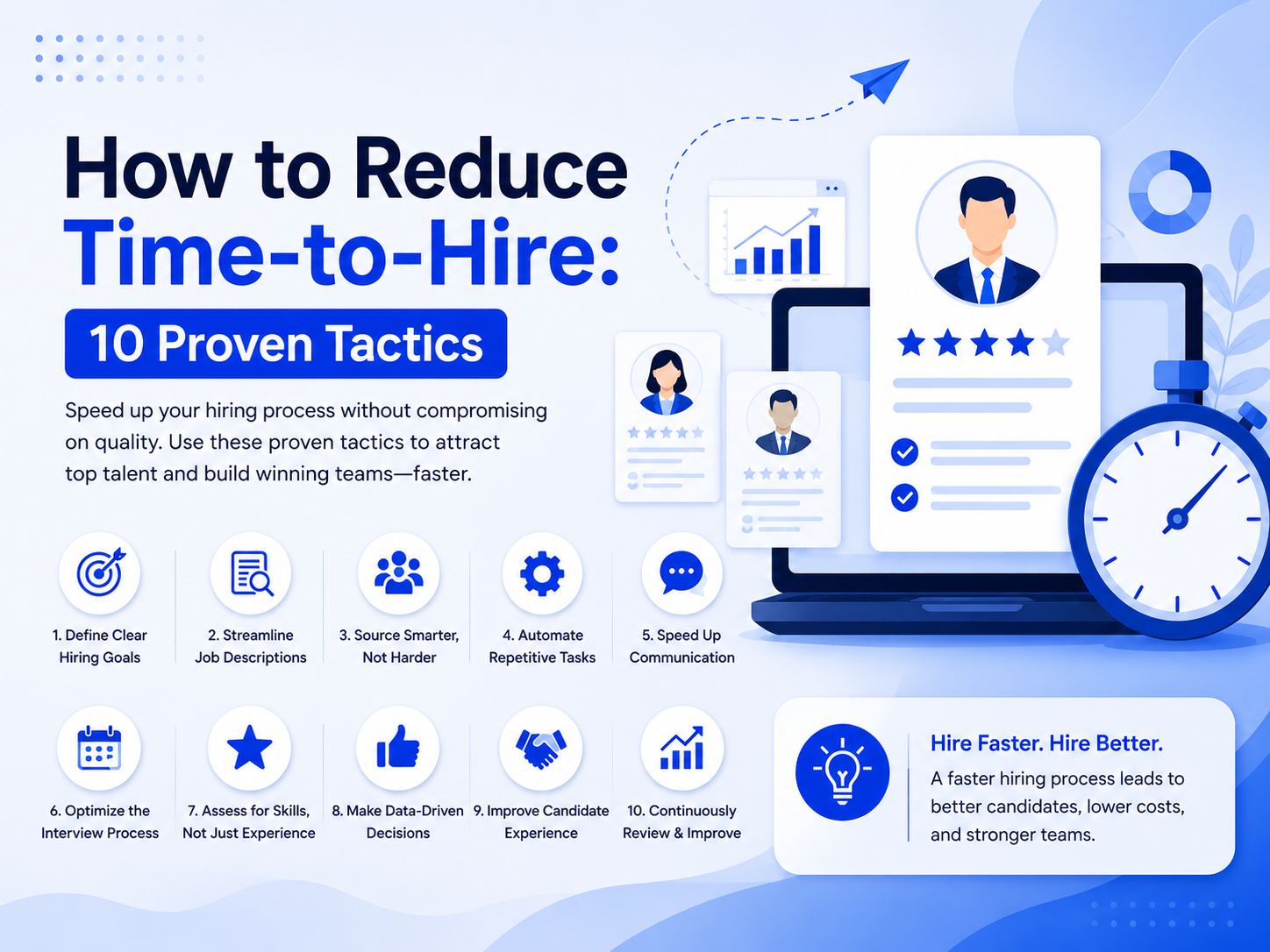
In the highly dynamic employment market of today, mastering operational talent tracking parameters remains top priority. Learning how to reduce time to hire meaning serves as the fundamental stepping stone for organizations seeking structured workforce stability. When corporate talent acquisition professionals evaluate corporate benchmarks, discovering how to reduce time to hire definition guidelines helps reveal major operational cracks inside internal candidate workflows. Broadly put, the time to hire metric maps the precise chronological journey an applicant undergoes from the very second they submit an application form to the breakthrough hour they formally sign their final employment contract. In clear operational terms, learning how to reduce time to hire explained means eliminating administrative latency, standardizing evaluation cycles, and making candidate journeys seamless. If your enterprise recruiters spend weeks reviewing applicant forms, adopting a comprehensive how to reduce time to hire guide will keep highly sought-after industry professionals from dropping out of your active sourcing pipeline.
When leadership analyzes regional recruitment data, understanding how to reduce time to hire 2026 requirements becomes necessary to protect corporate productivity across expanding technical hubs. Modern market trends demand that human resource teams move rapidly to match candidate expectations. Businesses studying how to reduce time to hire benefits consistently see immediate drops in overall drop-out rates during late-stage interview rounds. By putting an optimized how to reduce time to hire model into action, human resource managers can run smooth screening processes without sacrificing the depth of technical reviews. Sourcing platforms like the Kramate job network provide the advanced database architecture needed to accelerate initial profiling workflows. Transitioning your administrative talent methodologies onto a standardized tracking framework ensures your corporate recruitment teams avoid long delays that frustrate highly qualified applicants.
Demystifying Recruitment Speed Metrics and Operational Definitions
To scale an enterprise efficiently, human resource teams must look closely at how to reduce time to hire explained across corporate training programs. Many recruitment professionals confuse time-to-fill with time-to-hire metrics, which can skew performance data. When looking at how to reduce time to hire definition guidelines, time-to-fill tracks the entire lifespan of a job requisition from its initial internal post to final closure, whereas time-to-hire focuses entirely on the active applicant experience. Understanding this structural difference helps recruitment managers discover how to reduce time to hire meaning from an operational perspective, allowing them to pinpoint the exact internal bottlenecks slowing down active selections. Utilizing modern digital screening assets available on the Kramate job dashboard lets companies systematically strip out repetitive verification cycles that add no value to the final hiring decision.
Introducing modern talent platforms completely shifts the conversation around how to reduce time to hire vs alternatives like legacy manual tracking systems. Traditional recruitment tracking relies heavily on fragmented spreadsheets, which naturally cause communication delays between project leads and recruitment teams. Examining how to reduce time to hire pros and cons makes it clear that while switching to automated candidate processing software requires training investments, the long-term operational speed gains are immense. HR teams that use a cloud-based how to reduce time to hire process can easily share background files, schedule structured interview slots, and gather post-interview reviews instantly. Implementing these optimized systems helps organizations minimize candidate drop-offs and consistently build stronger relationships with top industry professionals.
| Recruitment Operational Factor | Legacy Manual Workflow | Optimized Kramate Platform Model | Measurable Corporate Outcome |
|---|---|---|---|
| Initial Resume Verification | 7 to 12 Business Days | 1 to 2 Working Days | Fast tracking of high-potential job applicants |
| Hiring Team Assessment Sync | 5 to 9 Working Days | Within 24 Hours | Elimination of internal communication gaps |
| Skills Validation Phase | 10 to 15 Calendar Days | 3 Calendar Days Max | Higher technical accuracy with less candidate fatigue |
| Final Employment Offer Sign-off | 4 to 8 Business Days | Same-Day Document Processing | Significantly lower late-stage offer rejection rates |
Evaluating the Real Financial Value of Fast Hiring Cycles
Every single week an important open position remains vacant, your organization loses operational momentum, highlighting why learning how to reduce time to hire cost factors is so critical. When finance teams look into how to reduce time to hire cost implications, they find that open technical roles drain developer resources and drive up premium ad spending. Transitioning to a streamlined how to reduce time to hire jobs sourcing workflow helps minimize these financial losses by filling empty desks with pre-vetted specialists. Businesses that follow standard how to reduce time to hire best practices enjoy lower cost-per-hire rates while improving team output across product units. Exploring specialized support programs like the Kramate Job Guarantee Program allows companies to build steady talent pipelines, preventing costly hiring emergencies.
When running a detailed how to reduce time to hire comparison against traditional recruitment agency models, internal platform tracking delivers far better financial and operational returns. Reviewing how to reduce time to hire pros and cons shows that while fast-tracking processes demand constant communication, the resulting savings from reduced agency fees are substantial. Human resource specialists who master how to reduce time to hire tips can save significant corporate budget by moving away from third-party sourcing networks. Relying on specialized digital hubs like Kramate keeps your talent pipeline warm and highly engaged, lowering long-term acquisition expenses. Real-world how to reduce time to hire examples show that organizations with fast, clear hiring steps win industry innovators away from slower market competitors every day.
10 Proven Tactics to Secure Top-Tier Talent Safely
1. Build an Active Talent Pipeline Before Open Requisitions Exist
Proactive candidate engagement is the core foundation for mastering how to reduce time to hire 2026 standards across fast-moving technical industries. Instead of waiting for a team member to resign before publishing open roles on public career platforms, teams should maintain warm pools of screened professionals. Adopting this predictive how to reduce time to hire model ensures that when an unexpected opening appears, your talent acquisition teams can immediately reach out to a vetted list of interested prospects. This proactive technique is central to optimizing how to reduce time to hire india market strategies, where intense tech competition requires constant networking with skilled professionals. Utilizing professional programs like the Job Assistant Program by Kramate helps enterprises build reliable talent pools, keeping top candidates interested well before formal openings occur.
2. Simplify and Standardize Interview Rounds
The main bottleneck behind slow corporate recruitment cycles is an over-complicated interview process filled with repetitive evaluation rounds. When reviewing how to reduce time to hire process challenges, organizations often find that requiring five or six separate interviews hurts applicant conversions without adding evaluative clarity. Implementing how to reduce time to hire best practices means replacing scattered individual check-ins with single, structured panel interviews that bring all key decision-makers together at once. This approach is highlighted in every modern how to reduce time to hire guide because it speeds up internal hiring consensus and reduces candidate drop-out rates. Using objective scorecards across interview teams ensures applicants are evaluated fairly on specific skills, rather than relying on subjective post-interview impressions.
3. Integrate Automated Calendar Scheduling Solutions
The administrative back-and-forth required to schedule simple initial introductory calls remains a persistent cause of recruitment delays. Looking into how to reduce time to hire tips confirms that adding direct calendar-sharing integrations into your communication flows solves this issue instantly. When analyzing how to reduce time to hire comparison statistics, HR departments that share real-time booking links see interview confirmation windows drop from days to minutes. This automated approach is particularly valuable when optimizing how to reduce time to hire for startups, where small leadership teams lack full-time administrative coordinators. Giving candidates direct power to choose open slots keeps hiring momentum high and prevents competitive applicants from losing interest during empty communication gaps.
"Transitioning our technical scheduling from manual email threads to automated calendar links allowed our recruitment team to cut down candidate booking delays by eighty percent, preserving critical momentum during active interview phases."
4. Write High-Converting and Clear Job Postings
Vague or overly long job descriptions attract unqualified applicants, which heavily bogs down your resume review phase. To fix this, implementing how to reduce time to hire best practices requires writing brief, highly accurate postings that clearly state mandatory certifications, remote flexibility, and realistic salary bands. By studying how to reduce time to hire explained case studies, we see that complete upfront clarity helps unqualified searchers self-select out of your pipelines early. This intentional optimization forms the foundation of a modern how to reduce time to hire model, ensuring sourcing teams spend time only on resumes that match operational needs. Sharing realistic, well-scoped role requirements across networks like Kramate ensures your opportunities reach targeted professionals ready to make an immediate impact.
5. Optimize Application Forms for Seamless Mobile Submissions
Forcing applicants to navigate lengthy, multi-page web forms that demand manual data entry for information already on their resumes leads to high abandonment rates. When studying how to reduce time to hire pros and cons, complex entry forms might filter out casual browsers, but they also turn away highly qualified passive talent who expect simple mobile interactions. Understanding modern how to reduce time to hire 2026 trends means lowering entry barriers down to a clean, single-click resume upload. This frictionless approach is a crucial pillar for how to reduce time to hire for startups looking to build robust applicant pools quickly. Streamlining your entry points increases the overall volume of great profiles coming into your recruitment systems.
6. Use Structured Skill Assessments Early in the Process
Relying on resume keywords alone often leads to long, unproductive introductory phone calls that pull your recruitment team away from high-value tasks. A proven how to reduce time to hire process tactic involves placing short, objective skills assessments right after the initial resume submission phase. When looking at successful how to reduce time to hire examples across global engineering firms, candidates who pass automated coding or analytical tests skip traditional screening steps entirely. This approach works incredibly well for managing how to reduce time to hire india campaigns, where massive application volumes can easily overwhelm traditional human resource resources. Front-loading objective technical evaluations ensures interview hours are reserved for applicants who have proven their practical abilities.
7. Leverage Specialized Niche Career Platforms
Publishing specialized job roles on giant, unsegmented job boards frequently results in an influx of mismatched applications that stall internal selection processes. When analyzing how to reduce time to hire vs alternatives, shifting your job alerts to targeted career networks or tailored portals like Kramate yields far more accurate candidate fits. Utilizing niche platforms is highly recommended in how to reduce time to hire services reports because these channels categorize professionals by clear technical domains and real certifications. This alignment saves your sourcing teams from weeks of manual filtering. Partnering with specialized ecosystems like Kramate helps companies scale technical production units quickly while maintaining a fast, high-quality hiring experience.
8. Set Clear Feedback Windows for Hiring Managers
Even the most energetic talent acquisition teams face major delays if internal hiring managers take weeks to share post-interview evaluations. Reviewing how to reduce time to hire meaning documentation emphasizes that recruitment is a shared company effort that requires fast responses from technical team leads. Implementing how to reduce time to hire tips effectively involves establishing clear internal Service Level Agreements (SLAs) that require interview notes within twenty-four hours. This operational discipline is key to how to reduce time to hire definition workflows that focus on removing internal bottlenecks. When technical leads see how delayed choices hurt team output, they prioritize post-interview reviews, keeping the process moving forward smoothly.
9. Prepare Pre-Approved Compensation and Offer Matrices Upfront
Long, drawn-out negotiations over base salaries and bonuses frequently derail hiring processes at the final finish line, causing companies to lose great candidates. To fix this, how to reduce time to hire best practices suggest establishing clear, pre-approved salary bands and offer letter templates before kicking off any active candidate search. When looking at how to reduce time to hire cost implications, losing an ideal applicant at the final hour means spending more money to restart a whole sourcing cycle. Having pre-approved salary matrices allows recruiters to extend official offers immediately after the final interview panel gives their approval. This organizational agility is a massive differentiator in how to reduce time to hire comparison audits, separating fast, modern enterprises from slow legacy companies.
10. Power Up a Rewarding Employee Referral Program
Your existing staff members represent an incredible channel for finding qualified, culturally aligned working professionals quickly. When exploring real-world how to reduce time to hire examples, referred applicants consistently move through internal technical stages significantly faster and show longer tenure. Developing a clear referral framework is an essential how to reduce time to hire guide tactic because referred individuals arrive with trusted internal backing. This practice is incredibly helpful for discovering how to reduce time to hire for startups, where building a dependable core team quickly is vital for early business growth. Offering clear financial or career incentives for successful placements turns your whole company into an active, high-speed talent sourcing team.
Operational Speed Note for Recruitment Teams
By shifting processing tasks onto the advanced candidate sourcing networks available via the Kramate hub, companies can cut resume validation workloads down by up to sixty percent. This operational boost allows recruiters to spend less time on manual data entry and focus completely on deep interviews with top-tier professionals.
Regional Market Dynamics: Navigating Hiring in India
Managing high-volume recruitment in expanding business hubs requires a deep understanding of how to reduce time to hire india market realities. In India's highly competitive industrial ecosystem, top software and engineering professionals often hold three or four competing employment offers simultaneously, making fast recruitment an absolute necessity. When talent leaders look at how to reduce time to hire 2026 patterns across Indian enterprise markets, they find that old-school multi-month hiring models lead to high dropout rates before onboarding. To stand out, companies must use highly communicative how to reduce time to hire process workflows that pair instant mobile text messaging alongside standard email loops. Leveraging local career portals like Kramate ensures recruiters can easily connect with active job hunters across major technical hubs, maintaining engagement throughout the journey.
Furthermore, studying how to reduce time to hire benefits inside the Indian corporate market shows that faster hiring directly reduces notice period drop-outs—a huge headache for local HR managers. When calculating how to reduce time to hire cost factors in competitive markets like Bengaluru, Gurgaon, or Mumbai, long interview stages give candidates time to use your offer to negotiate higher packages elsewhere. Implementing smart how to reduce time to hire tips, like running single-day weekend interview drives, helps companies lock in great talent quickly and reliably. Sharing successful how to reduce time to hire examples across your internal business units reinforces the value of rapid decision-making, helping your company earn a great reputation as an agile, preferred employer in the regional market.
Framework Analysis: Platforms Versus Traditional Sourcing
When looking at how your company handles talent acquisition, running a comprehensive how to reduce time to hire comparison against old-fashioned methods shows the value of modern, platform-driven recruitment. Old-school practices rely heavily on manual keyword parsing and slow email threads, which naturally delay the entire hiring cycle. In contrast, adopting a modern how to reduce time to hire model uses automated pre-screening, shared pipeline boards, and instant feedback loops. Reviewing how to reduce time to hire pros and cons makes it clear that while updating your internal hiring workflows requires initial training, the benefits—like lower overall costs and higher candidate quality—far outweigh the setup effort. Moving away from legacy systems gives your business a much more responsive, flexible talent acquisition engine.
For fast-growing companies weighing how to reduce time to hire vs alternatives, such as outsourcing all hiring to high-priced executive search firms, building a fast internal recruitment setup is usually the more sustainable choice. Relying completely on external placement agencies can disconnect your internal managers from the actual candidate experience and pile up large commission fees over time. By utilizing modern how to reduce time to hire services and leveraging specialized platforms like Kramate, companies keep full control over their employer brand while keeping hiring speeds high. This direct hiring approach ensures your candidates enjoy a unified, professional journey from their very first application all the way to their official onboarding day.
| Recruitment Capability | Legacy Sourcing Routes | External Agency Outsourcing | Kramate Integrated Pipeline |
|---|---|---|---|
| Hiring Loop Velocity | 45 to 65 Calendar Days | 30 to 50 Working Days | 14 to 21 Days Max |
| Direct Sourcing Overhead | High internal tracking hours lost | Heavy percentage-based finder fees | Highly optimized processing cost |
| Applicant Journey Consistency | Often fragmented and slow | Managed by external third parties | Direct, transparent, and branded |
| Performance Tracking Integration | Manual spreadsheets and logs | Closed, external tracking software | Centralized real-time analytical insights |
Tailoring Agile Frameworks for Startups and Scale-ups
Early-stage companies operate in incredibly fast environments where every empty desk can stall critical product timelines, making it vital to master how to reduce time to hire for startups strategies. When founder-led teams study how to reduce time to hire guide principles, they quickly realize they cannot afford the long, multi-layered approval processes typical of large enterprises. Startups need a lean, fast-moving how to reduce time to hire process that allows leaders to interview a candidate and extend an official offer within the same week. By prioritizing how to reduce time to hire benefits, early-stage businesses can leverage their agility to hire top-tier talent who are tired of the slow hiring processes at larger corporations. Using targeted platforms like Kramate helps lean startup teams connect directly with energetic professionals ready to make an immediate impact.
Additionally, looking at how to reduce time to hire examples in successful scale-ups shows that treating candidate communication like customer acquisition keeps talent pipelines highly active. For deeper insights, recruitment leads can look to active community discussions on platforms like LinkedIn or industry threads on Reddit and Quora to see real-world candidate feedback regarding modern hiring speeds. Job seekers regularly share their interview experiences on these channels, highlighting how frustrating long delays can be. By avoiding common hiring pitfalls and using clear, structured evaluation templates, your startup can build a reputation for treating candidates' time with respect. This positive employer brand helps you consistently attract high-quality professionals, even when competing against large organizations with massive recruitment budgets.
Evaluating Structural Balance: Managing Speed and Selection Quality
While accelerating your hiring cycle brings clear advantages, human resource leaders must also consider how to reduce time to hire pros and cons to maintain high evaluation standards. A major benefit of mastering how to reduce time to hire meaning is the ability to secure top talent before they accept competing offers, while also lowering your overall cost-per-hire. However, if your team focuses solely on speed without using structured scorecards, they risk rushing the evaluation process and making mis-hires. To balance this, how to reduce time to hire best practices emphasize using objective, automated skills assessments alongside behavioral interviews. This balanced approach ensures your hiring process stays fast without sacrificing the quality of your evaluations.
When explaining how to reduce time to hire explained concepts to corporate stakeholders, it is important to show that speed and quality can go hand in hand when supported by the right tools. Reviewing how to reduce time to hire definition guidelines confirms that optimizing this metric is about removing administrative delays, not cutting corners on candidate vetting. By choosing a modern how to reduce time to hire vs alternatives strategy that relies on centralized talent platforms like Kramate, you eliminate manual tasks like scheduling emails and data entry. This automation frees up your recruiters to focus on deep, meaningful candidate assessments, helping your company build a fast, highly effective, and scalable recruitment ecosystem.
Maximizing Talent Platforms for Specialized Career Placements
Using generic employment directories often results in a flooded inbox of unrelated profiles, which highlights why integrating tailored how to reduce time to hire services is so important. When tracking specialized roles like engineering or product design, sourcing teams need platforms that categorize candidate listings by verified experience levels. Following a structured how to reduce time to hire model helps internal recruitment teams connect with active job hunters who have already cleared fundamental technical screenings. This alignment is highly valuable for modern human resource divisions managing how to reduce time to hire jobs campaigns under tight project deadlines. Utilizing specialized sourcing engines like Kramate ensures your open roles are seen by matching professionals, removing weeks of manual screening delays.
In addition, enterprise talent acquisition leaders who study how to reduce time to hire explained handbooks know that providing a clear application path improves employer brand conversions. When candidate profiles flow seamlessly from career networks straight into internal evaluation tools, your team can review portfolios without losing momentum. This approach forms the core of any successful how to reduce time to hire guide focused on modern hiring practices. Combining automated tracking systems with targeted talent engines like Kramate allows your business to quickly scale technical operations, ensuring open roles are filled by great talent without missing a beat.
To optimize your hiring further, check out these highly effective operational methods:
Conclusion: Turn Sourcing Speed Into Your Ultimate Growth Strategy
Optimizing your recruitment speed is a powerful way to build a stronger, more agile organization. By learning how to reduce time to hire 2026 strategies and tailoring them to your specific market needs—such as navigating how to reduce time to hire india landscapes or streamlining how to reduce time to hire for startups—you turn talent acquisition into a distinct competitive advantage. Implementing proven how to reduce time to hire tips, like standardizing interview rounds and using automated scheduling, helps remove the administrative bottlenecks that cause top candidates to drop out. Partnering with dedicated career networks like Kramate provides your team with the modern tools and targeted pipelines needed to find, evaluate, and hire top professionals quickly and efficiently.
As you refine your internal processes using this how to reduce time to hire guide, remember that consistency and clear communication are key to long-term success. Consistently tracking your hiring data, setting clear internal feedback deadlines, and maintaining a warm, proactive talent pool will keep your recruitment cycle moving smoothly. Embracing these modern, candidate-friendly practices protects your organization from high vacancy costs while creating an exceptional experience for applicants. Start updating your hiring workflows today, connect with top-tier talent through specialized platforms, and watch your business scale with the right people in place.


