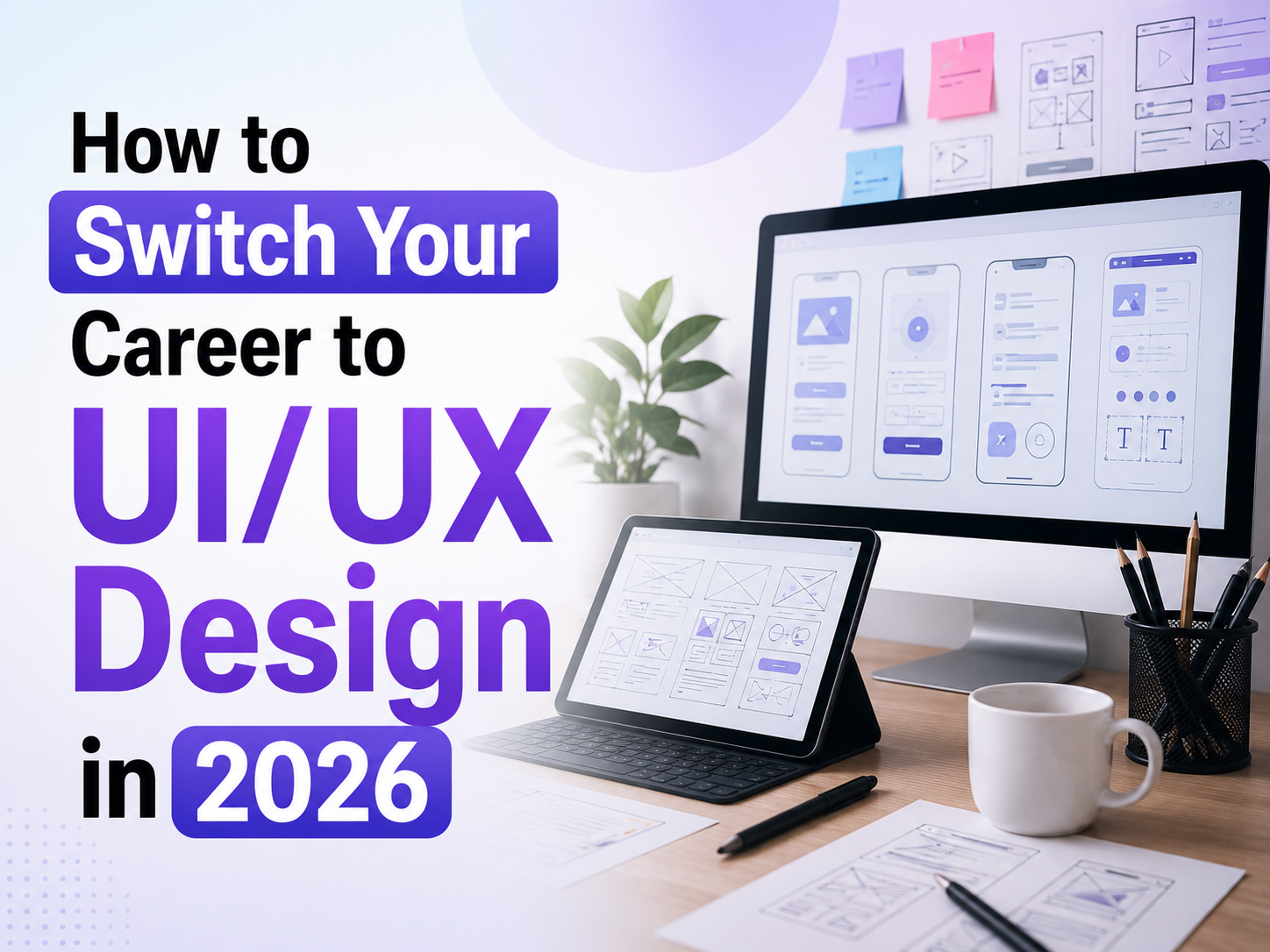
The Macro Shift: Navigating a Career Switch to UI/UX Design in 2026
The global product development industry is seeing a massive restructuring, altering the foundational standards for digital experience frameworks and defining a clear roadmap for corporate professionals starting a career switch to ui/ux design. Modern product groups that previously valued basic visual aesthetics alone have shifted focus to look for validated user metrics, systematic component scalability, and deep behavioral interaction psychology. Learning exactly how to switch career to ui/ux design in this modern landscape requires a strong commitment to production-ready design architectures rather than isolated visual layouts.
Initiating an enduring change career to ui/ux design in the current competitive market demands a strategic, verified placement approach. Rather than applying through crowded, generic channels, non-traditional design candidates are fast-tracking their placement success by using the dedicated tracking channels of the Kramate Job Portal (ITPL). This industry platform filters out typical application bottlenecks, matching switchers directly with corporate enterprise teams through verified interactive mockups, case studies, and modern skill verification metrics.
Evaluating the Interface Field: Is It Worth Switching to UI/UX Design?
A systematic analysis of contemporary corporate experience design investments provides absolute clarity regarding the primary question: is it worth switching to ui/ux design? Modern consumer ecosystems require scalable cross-platform designs, accessible transaction paths, and deep behavioral research frameworks across all software applications. Real-world analysis of industry hiring patterns shows that organizations are addressing critical user experience talent shortages by actively sourcing candidates from diverse, non-traditional backgrounds.
Successfully completing a high-impact career switch to ui/ux design 2026 requires a clear focus on solving the core conversion and usability problems that product teams deal with daily. Professionals managing a switch to ui/ux design from other field bring valuable industry context from backgrounds like market research, customer success, marketing, or behavioral psychology. When combined with modern layout, prototyping, and user journey skills, this past experience makes you a top-tier asset for employers building complex enterprise software products.
Strategic Placement Context Brief: Landing premium positions during a transition to ui/ux design career means going far beyond basic aesthetic theories. Connecting your interactive prototyping portfolios with real, validated case studies gives you a distinct advantage on major search channels like Naukri, LinkedIn, and exclusive product design hiring networks.
The Experience Economy Matrix: Product Design Salary Horizons
To help you confidently navigate your transition path, the comprehensive matrix below maps technical entry baselines, mid-career pathways, core tech stacks, and specialized tracks on the Kramate Job Portal:
| Target Product Design Specialization | Average Entry Base | Mid-Career Range (3-5 Yrs) | Primary Tool & Stack Focus | Required UI/UX Design Skills to Switch |
|---|---|---|---|---|
| Product UX Architect Track | ₹7,00,000 - ₹11,50,000 | ₹15,00,000 - ₹26,00,000 | Figma / FigJam Engine | User Research, Heuristic Analysis, Wireframing, Personas, User Journeys |
| UI Systems & Visual Engineer | ₹7,50,000 - ₹12,00,000 | ₹16,00,000 - ₹28,00,000 | Figma Variables / Tokens | Design System Engineering, Typography, Auto-Layout, Component States |
| Interaction Prototype Specialist | ₹8,00,000 - ₹13,50,000 | ₹17,00,000 - ₹32,00,000 | Protopie / Advanced Figma | Micro-interactions, Advanced Variables, Conditional Logic, User Testing |
| UX Research Analyst | ₹6,80,000 - ₹10,50,000 | ₹14,00,000 - ₹24,00,000 | Miro / Hotjar Suite | Qualitative Interviews, Usability Testing, Quantitative Data Analytics |
| Mobile Experience Designer | ₹7,20,000 - ₹12,50,000 | ₹16,50,000 - ₹30,00,000 | iOS Human Interface / Material Design | Responsive Grid Layouts, Native Mobile Patterns, Touch Mechanics, Overlays |
Tactics 1 to 5: Establishing Your Structural Design Foundation
Tactic 1: Master Figma Component Architecture and Advanced Token Systems
The single most costly error when researching how to get into ui/ux design is learning design as just drawing static layouts. Treating design files as disconnected illustration screens leaves you unprepared for collaborative corporate workflows. Instead, focus entirely on mastering professional cloud infrastructure ecosystems like Figma. Dive deep into auto-layout structures, component properties, responsive nesting rules, and reusable design token matrices.
A highly successful ui/ux design career change india requires building highly scalable, development-ready design files. When engineering and design directors review portfolios from non-traditional candidates, they look for systematic organization, clear alignment rules, and explicit responsive design guidelines over simple artistic expression. Mastering file architecture gives you a major advantage in corporate design reviews.
Tactic 2: Utilize a Dedicated UI/UX Design Roadmap for Switchers
Guiding yourself through a successful career transition requires a structured, phase-by-phase learning framework to maintain steady momentum and avoid skill gaps. Following a verified, comprehensive ui/ux design roadmap for switchers ensures you build your knowledge base from core human interaction patterns upward. Your early milestones should focus on typography hierarchy, color theory math, and white space ratios before moving on to complex user testing strategies.
This organized, step-by-step progression is exactly how the comprehensive Job Guarantee Program sets up its professional design curricula. By connecting your daily learning with practical design sprint challenges, you transition naturally from basic mockups to advanced enterprise systems. This hands-on preparation ensures you are ready to handle live product design tasks with confidence.
Tactic 3: Build Validated Case Studies and Avoid Generic Redesign Challenges
To successfully land premium ui/ux design jobs after career change, you must entirely move past shallow, surface-level redesign concepts. Simple cosmetic makeovers of popular apps without real user data do not show enterprise design capabilities to hiring managers. Instead, focus your efforts on developing deep, research-backed case studies that fix clear business and usability problems.
When you share detailed design case studies containing user persona discovery, wireframe iterations, and measured usability testing updates, you show recruiters that you are a business-focused problem solver. Present your interactive designs clearly in live Figma prototypes and document your strategic decisions thoroughly. This provides undeniable proof of your capabilities during screening processes.
Tactic 4: Pivot Efficiently from Non Technical to UI/UX Design Sectors
If you are planning a career transition from a non technical to ui/ux design career track, remember that your prior professional experiences are a major asset. Your past experience in communications, human relations, or business analysis provides a unique advantage when conducting deep user research. The key is translating that domain experience into scalable technical solutions.
For instance, a customer support background translates into deep empathy for mapping customer pain points, while a retail management history helps streamline e-commerce user checkout flows. Highlighting this unique combination of domain knowledge and modern experience design skills helps you stand out from candidates who have purely technical training.
Tactic 5: Launch a Successful UI/UX Design Career Switch at 30
Successfully managing a ui/ux design career switch at 30 or beyond requires focusing heavily on strategic communication and cross-functional product leadership. Mature career switchers excel at understanding business growth objectives, navigating team dynamics, and managing project timelines. These essential professional skills are highly valued by corporate product teams globally.
When you blend these proven business capabilities with modern design system workflows, you create a distinct professional profile that sets you apart. Frame your transition not as a total career reset, but as a natural evolution into design strategy. This professional presentation makes you a highly attractive candidate for growing technology brands.
Core Competency Framework for Modern Experience Designers
Tactics 6 to 10: Launching Your Sourcing Strategy and Portfolio Outreach
Tactic 6: Master Foundational UI/UX Design for Beginners Career Models
To establish a highly profitable and sustainable trajectory within the ui/ux design for beginners career track, prioritize absolute mastery over fundamental human-computer interaction layers. Focus your training on understanding how user eyes scan interfaces, how web navigation systems work, and how accessible touch target sizing prevents real-world user frustration. This foundational systems knowledge is essential for a long-term product design career.
By connecting these core behavioral guidelines with practical layout practices, you quickly develop a natural, intuitive approach to digital problem solving. This foundational focus ensures that no matter how rapidly corporate tools change, you can easily adapt your skills to meet modern market demands.
Tactic 7: Learn UI/UX Design for Career Change via Immersive Corporate Internships
The single most effective strategy to learn ui/ux design for career change is embedding yourself directly within active corporate design teams. Shifting from solo projects to multi-disciplinary corporate tracks teaches you how to collaborate with engineers, balance business goals, and navigate design critique sessions.
Securing a dedicated Kramate Internship bridges this experience gap perfectly. Working directly alongside senior product designers allows you to apply your theoretical training to live consumer applications, dramatically accelerating your design growth and building a highly competitive professional history.
Tactic 8: Optimize Profiles for UI/UX Design Entry Without Experience Openings
When actively seeking ui/ux design entry without experience roles, pivot your application strategy away from generic experience descriptions toward verifiable proof of your technical skills. Your live Figma files, interactive prototype links, and user testing logs serve as your primary professional credentials. This tangible output clearly demonstrates your readiness for professional development roles.
Structuring your candidate profile on the Kramate Job Portal allows you to directly display your live application links and verified skills portfolio to recruiters. This verified, portfolio-first approach ensures your application gains immediate traction with engineering teams looking for capable, hands-on builders.
Tactic 9: Leverage the Specialized Job Assistant Program for Direct Placement Traction
Attempting to navigate the modern tech market entirely on your own often leads to wasted effort and slow progress. Connecting with senior software mentors provides invaluable clarity on industry hiring standards, technical interview expectations, and architectural best practices. This guidance helps you streamline your preparation and avoid common pitfalls.
Utilizing a comprehensive Job Assistant Program provides you with dedicated resume coaching, targeted interview preparation, and direct corporate referral pathways. This personalized, hands-on support turns your career transition into a predictable, highly structured journey to success.
Tactic 10: Sync Your Job Sourcing Vectors Across Leading Design Platforms
To secure a premium design position, your professional presence must extend beyond basic job applications. You need a synchronized networking strategy that covers specialized talent portals, community hubs, and developer networks to maximize your market visibility. Active participation across community platforms like Reddit, Quora, and LinkedIn can unlock hidden opportunities.
Participating in technical discussions on community boards and answering development questions on platforms like Quora helps establish your industry credibility. Combining this grassroots community engagement with a verified, up-to-date profile on professional hubs like LinkedIn and the Kramate Job Portal creates a powerful inbound channel that naturally attracts premium hiring managers to your profile.
The 30-Day Tactical Design Transition Roadmap
Securing an elite development role requires a highly structured, organized approach. This comprehensive operational roadmap coordinates your portfolio refinement, platform synchronization, and application outreach across a focused 4-week window:
Ensuring Safe Information Privacy Practices in Your Search
Safeguarding your personal data is a vital part of looking for career opportunities across modern online networks. Following industry-standard data practices ensures a secure career transition:
Job Seeker Protection Notice: Established corporate employers and verified talent networks—including all technology openings hosted on the Kramate Job Portal (ITPL)—never request processing fees, specialized hardware deposits, or training documentation costs from candidates. If a recruiting point of contact asks for financial payments during your application process, cease all contact immediately.
Frequently Asked Questions — Product Experience Edition
Take the Next Step in Your Professional Career
The global product experience landscape moves at an exceptional pace, creating valuable opportunities for proactive specialists who back their career goals with structured, organized action. Your next professional milestone depends entirely on the concrete application steps you take right now.
Take charge of your career path. Optimize your profile, define your target compensation, and start exploring verified high-value positions by visiting the official Kramate Job Portal (ITPL) today. Your next opportunity is waiting!
Explore Live Openings Now