
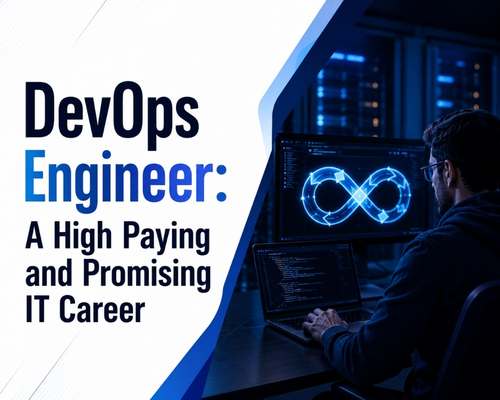
DevOps Engineer Career 2026 | Tools, Salary & Growth
The core infrastructure landscape supporting the global engineering community is experiencing a monumental transformation, cementing the practice of continuous delivery and platform reliability as a highly definitive and promising IT career of this decade. No longer constrained to manual provisioning systems, modern web systems require real-time synchronization between source changes and distributed compute targets. This sweeping shifts across global sectors have triggered a massive increase in specialized infrastructure jobs and high-paying deployment paths.
Succeeding in this highly automated, distributed development ecosystem requires a structured, intentional plan rather than a casual reliance on legacy deployment scripts. Proactive engineering candidates are leveraging the comprehensive tracking systems available through the Kramate Job Portal (ITPL) to identify direct, active talent openings managed by verified global enterprises. By matching your real-world architecture experiences directly with modern platform orchestration needs, you can easily stand out from general applicant lists and land directly inside cloud systems teams searching for your unique talents.
Deconstructing the Modern Infrastructure Space: Core Paths and Toolsets
A granular look at the current web developer India and cloud architecture landscape shows distinct specialized tracks centered on systems resilience. The traditional path historically treated operational maintenance as a reactive task that only focused on server health checks after an outage occurred. However, our ongoing analysis of hiring trends india demonstrates that the modern cloud sector relies heavily on proactive automation frameworks that require specialized DevOps tools.
The most explosive demand trend is found within the scalable boundaries of the specialized DevOps career track. These professionals design infrastructure code layers, manage delivery networks, and configure orchestrators to distribute applications across cluster endpoints. For anyone working to build an impactful, future-proof SRE career, understanding standard application coding is just the beginning; success requires absolute mastery over automated provisioning ecosystems and delivery pipelines, verified by project links on your primary ITPL platform dashboard.
Strategic Automation Placement Brief: Landing high-growth infrastructure positions in today's tech market requires moving past simple local script operations. By aligning your public project repositories with robust orchestration and infrastructure-as-code models, you instantly gain premium visibility across the top employers india search databases.
The Corporate Allocation Matrix: DevOps Engineer Salary Guide 2026
To help you effectively navigate these high-growth infrastructure tracks, the matrix below details entry-level baselines, mid-career scales, principal tool patterns, and the essential competencies requested by global technology groups:
| Target Infrastructure Track | Average Entry Salary | Mid-Career Salary (3-6 Yrs) | Primary Tool Focus | Mandatory Ecosystems & Frameworks |
|---|---|---|---|---|
| Cloud Automation Engineer | ₹9,00,000 - ₹13,00,000 | ₹18,50,000 - ₹34,00,000 | Infrastructure-as-Code | Terraform, AWS CloudFormation, Ansible, Pack, Python |
| Container Orchestration Pro | ₹10,50,000 - ₹15,50,000 | ₹22,00,000 - ₹40,00,000 | Cluster Management | Kubernetes, Docker, Helm, Istio Service Mesh, CoreOS |
| Site Reliability Engineer (SRE) | ₹11,50,000 - ₹18,00,000 | ₹26,00,000 - ₹46,00,000 | Telemetry & Resilience | Prometheus, Grafana, Datadog, ELK Stack, Linux Internals |
| Continuous Delivery Architect | ₹8,50,000 - ₹12,50,000 | ₹19,00,000 - ₹32,00,000 | Pipeline Integration | Jenkins, GitHub Actions, GitLab CI, ArgoCD, SonarQube |
| DevSecOps Guard Specialist | ₹11,00,000 - ₹16,50,000 | ₹24,00,000 - ₹42,00,000 | Automated Compliance | Aqua Security, Trivy, HashiCorp Vault, Snyk, SonarQube |
| Principal Platform Director | ₹24,00,000 - ₹36,00,000 | ₹55,00,000 - ₹85,00,000+ | Strategic Engineering | Multi-Cloud Architecture, FinOps, System Design, ISO27001 |
6 Common Pitfalls Automation Job Seekers Must Avoid
1. Showcasing Basic Local Handcrafted Container Builds
The absolute fastest way to get overlooked for competitive Docker career paths is maintaining a public profile that only shows basic local builds or unoptimized container adjustments. Professional reviewers can spot simplistic tutorial tasks instantly. To clearly prove your engineering talent, demonstrate highly optimized, multi-stage builds that minimize vulnerability footprints and reduce enterprise storage overhead.
2. Disregarding Cloud Financial Management and Resource Tuning
Many candidates focus entirely on spinning up vast compute networks while completely ignoring the associated infrastructure billing models. Leaving massive database engines running unmonitored inside staging frameworks offers zero value to an enterprise looking to optimize its budget. Highlighting your experience with scaling configurations, auto-pausing rules, and infrastructure right-sizing practices gives you a massive advantage.
3. Overlooking Real-Time Telemetry and Predictive System Monitoring
Applicants frequently assume that managing deployment pipelines is the only requirement for landing premium CI/CD jobs. In real-world enterprise environments, understanding how an application performs after deployment is just as vital. If you cannot track query speeds, map performance metrics, or configure custom log triggers, your teams are left in the dark when bugs hit production. Highlighting your monitoring skills helps you clear technical interviews with ease.
4. Leaving Hardcoded Secrets and Access Tokens in Public Repositories
Pushing infrastructure configurations containing naked access keys, internal passwords, or exposed server URLs completely ruins your professional credibility. If an interviewer inspects your automation portfolios and finds unprotected environment details, they will quickly move on. Always manage your configurations securely by isolating sensitive tokens within secure secret managers or protected storage layers.
5. Relying on Outdated Scripting Rules and Manual Provisioning Tasks
Using older shell patterns or relying on manual, click-based server adjustments signals a lack of familiarity with modern automation protocols. To capture premium platform engineering opportunities, replace old manual steps with declarative configuration matrices, automated testing steps, and clean immutable systems that fit an ongoing Terraform jobs search track.
6. Dispersing Uniform Application Profiles Across Distinct Infrastructure Roles
Blasting an identical resume to dozens of distinct vacancies on generic message boards returns very few technical interviews. Every cloud team prioritizes a different combination of tools—some focus heavily on cluster environments, while others prioritize monitoring setups. Customizing your core technologies section for each specific role guarantees your profile stays highly visible in automated ranking systems.
Your Platform Infrastructure Deployment Checklist
Tailored Guidance: Strategic Recommendations by Professional Background
Building a top-tier career in cloud automation requires matching your current engineering skills with the right path. Selecting the optimal training focus based on your technical foundation ensures steady, high-value career growth:
Traditional Software Developers & Core Feature Engineers
For existing application engineers looking to shift into infrastructure automation, focus your transition on containerization, immutable deployments, and pipeline designs. Maximize your engineering value by showcasing your deep understanding of application lifecycles, and use that knowledge to design automated continuous delivery systems.
Primary Growth Strategy: Target fast-moving product teams looking to bridge the gap between feature development and scalable runtime environments.
Classic System Administrators & IT Support Staff
For classic systems handlers looking to modernize their careers, prioritize learning infrastructure-as-code tools, version control structures, and cloud-native architecture patterns. Bridge your deep system-level knowledge with an active DevOps roadmap to become a highly sought-after candidate for enterprise cloud teams.
Primary Growth Strategy: Target large enterprise transformations, multi-cloud migrations, and dedicated site reliability engineering (SRE) divisions.
The Definitive DevOps Roadmap: A Tactical 4-Week Action Plan
Securing an elite platform automation role in today's competitive job market requires a highly structured strategy. This phase-by-phase action plan is designed to optimize your project portfolios, refine your online profiles, and streamline your applications over a focused 30-day window:
Ensuring Safe Information Privacy Practices in Your Search
Safeguarding your personal data is a vital part of looking for career opportunities across modern online networks:
- Protect Sensitive Private Data: Do not add confidential identifiers like your Aadhaar details, bank routing numbers, or home address on your primary resume files.
- Validate Recruiting Domains: Confirm that interview invitations and written employment offers come from official company web domains rather than free, public email addresses.
- Use Trusted Career Channels: Run your job applications through verified professional networks that screen corporate accounts to protect candidate information.
Job Seeker Protection Notice: Established corporate employers and verified talent networks—including all cloud automation openings hosted on the Kramate Job Portal (ITPL)—never demand processing fees, specialized hardware deposits, or training documentation costs from candidates. If a recruiting point of contact asks for money during your screening, stop all communication immediately.
Frequently Asked Questions — DevOps Infrastructure Edition
Take the Next Step in Your Professional Career
The global cloud infrastructure market moves at a remarkable pace, opening up incredible opportunities for automated infrastructure specialists who back their goals with structured, organized action. Your next professional milestone depends entirely on the concrete application steps you take right now.
Take charge of your career path. Optimize your profile, define your target compensation, and start exploring verified high-value positions by visiting the official Kramate Job Portal (ITPL) today. Your next opportunity is waiting!
Explore Live Openings Now